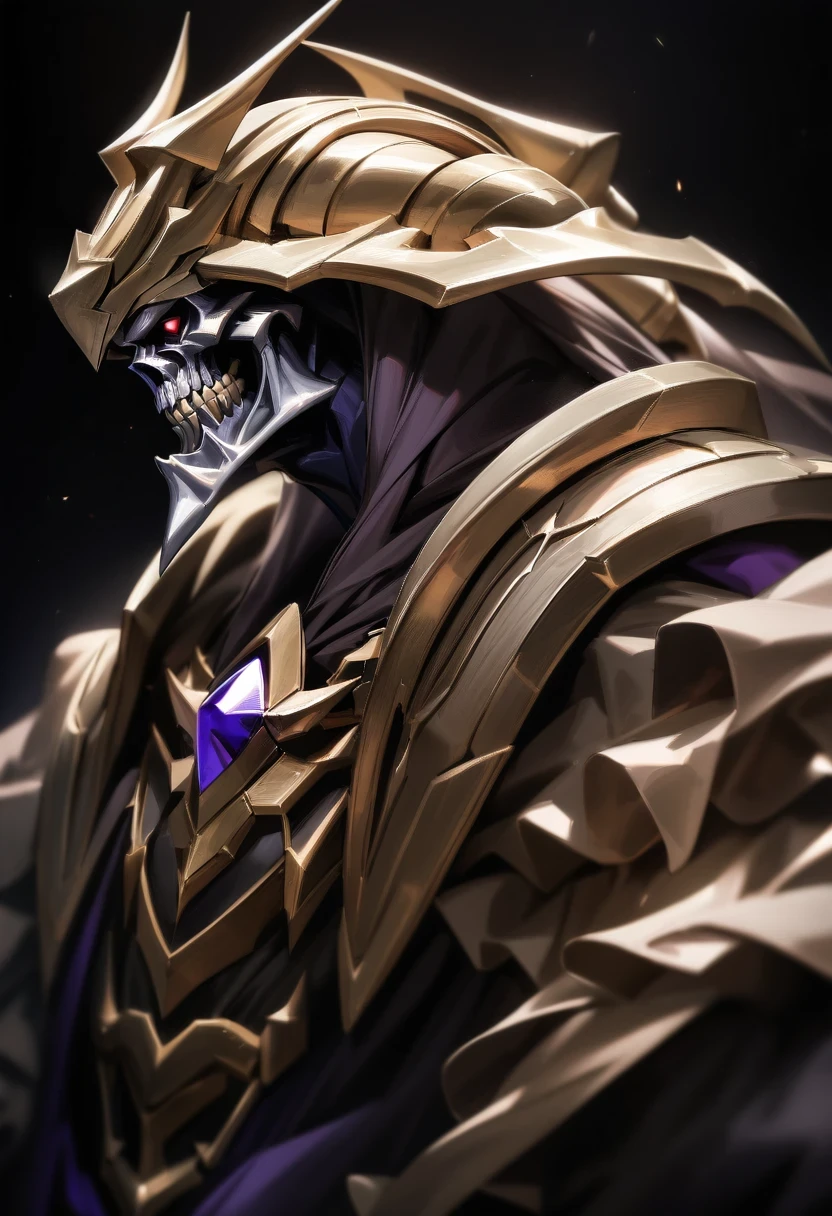

Comparing an authority-based YPS-4 entity to a physical YPS-3 combatant is a category error; one manages the world's board while the other masters a single piece. The real divergence lies in how they treat power as a tool for identity. For Ainz, power is a mask he cannot remove. He operates as a corporate manager in a skeleton's body, where his authority is a cage of expectations set by his subordinates. His lack of growth is a feature, not a bug; he is a finished product of a dead game, now eroding into the undead mindset of his avatar. Eris views power as the only currency for autonomy. Her decision to abandon her nobility and her relationship to train in the mountains transforms her from a reactive child into a tempered blade. While Ainz's YPS-4 status isolates him behind a wall of performance, Eris's YPS-3 ceiling is an invitation to strive. This reveals the genre's hidden trade-off: the more "overpowered" a character starts, the more their story becomes a study in stagnation. Eris's journey is an ascent; Ainz's is a slow, gold-plated slide into dehumanization.
Archetype breakdowns and dispute court land in later phases.