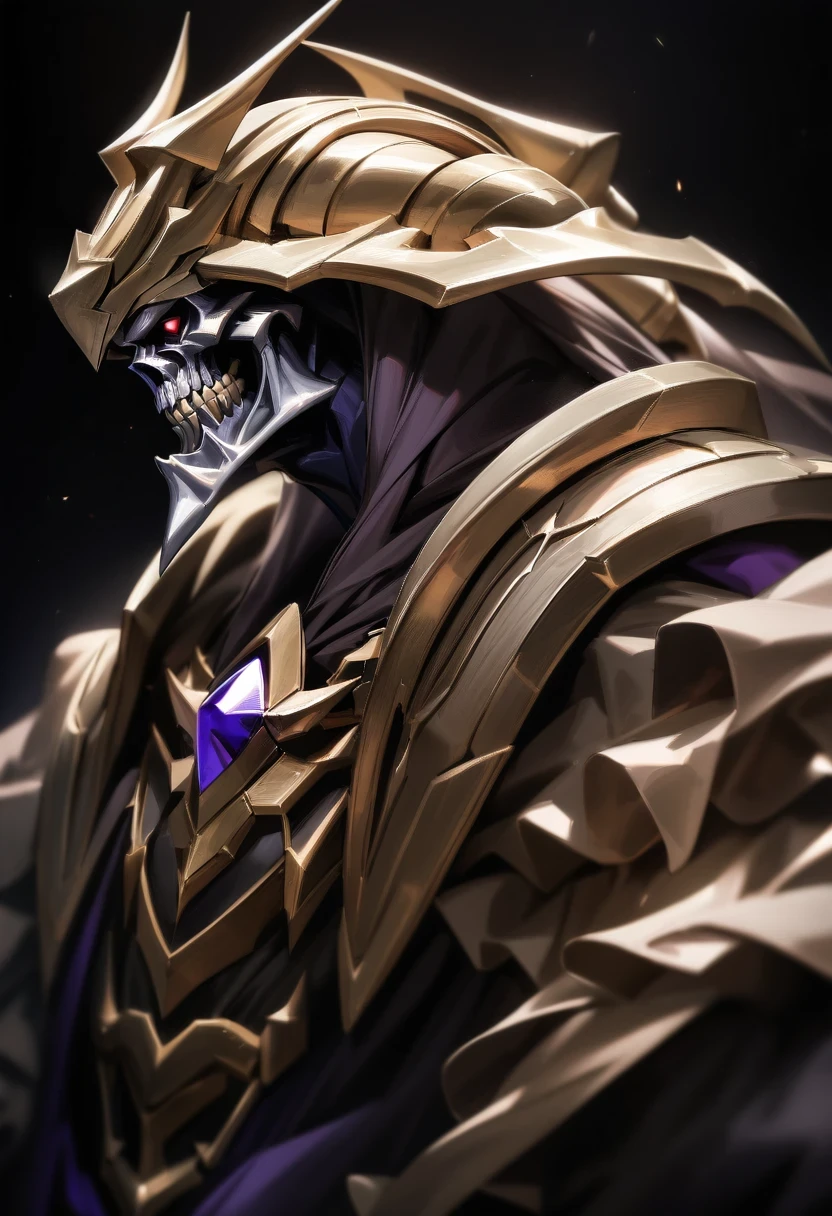

The core tension of the isekai experience is not the acquisition of power, but the performance of it. Because Ainz operates on a scale of authority and Iruma relies on narrative convenience, a direct YPS comparison is meaningless; YPS-4 national deterrence and YPS-2 awakened agility occupy different ontological planes. Instead, the real data point is their shared status as imposters. Both characters survive by masquerading as something they are not to protect a chosen family. Ainz adopts the persona of a cold, omniscient tyrant to satisfy the expectations of the Nazarick NPCs, transforming his corporate anxiety into a tool of geopolitical dominance. Iruma, conversely, leans into the role of the unassuming student, using his innate kindness to accidentally navigate the hierarchy of Babyls. While Ainz suppresses his humanity to maintain the facade of a monster, Iruma uses his humanity to redefine what it means to be a demon. The contrast lies in the direction of the deception. Ainz uses a mask of strength to hide an insecure salaryman, whereas Iruma uses a mask of weakness to hide a burgeoning leader. This reveals that in isekai, social survival often outweighs combat capability. The power being measured here is not the ability to destroy a city or cast a spell, but the capacity to manage an image. Ainz's tragedy is that his performance is becoming his reality, while Iruma's triumph is that his authenticity is becoming his power.
Archetype breakdowns and dispute court land in later phases.