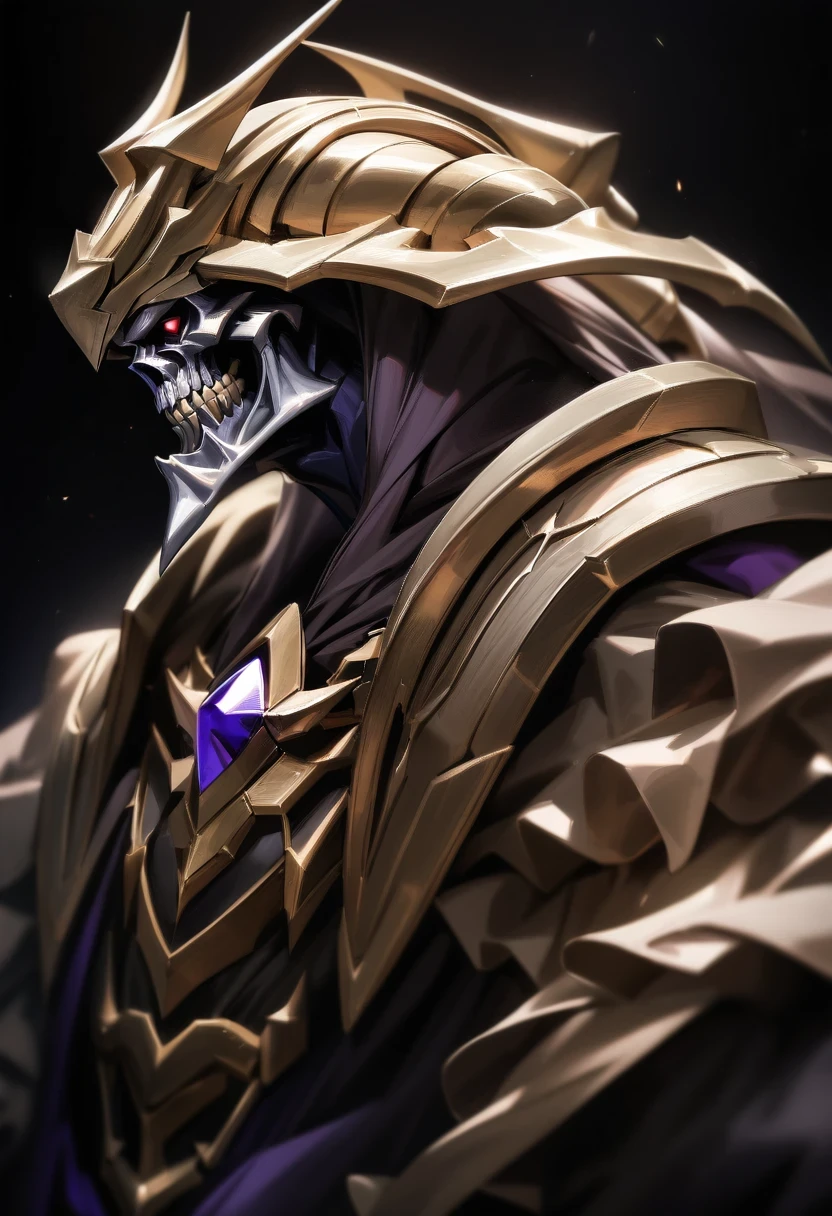

The fundamental tension in isekai power dynamics isn't the scale of destruction, but the relationship between the user's identity and their utility. Comparing Ainz Ooal Gown (YPS-4, Authority) and Megumin (YPS-3, Physical) proves that YPS tiers are secondary to power types; one governs through systemic fear while the other operates as a singular, explosive event. Ainz treats his nation-level capabilities as a corporate burden, a performance of omnipotence designed to manage the expectations of the Nazarick NPCs. His power is a mask that erodes his remaining humanity, forcing him to adopt the cold logic of a middle manager to maintain a facade of godhood. He is a prisoner of his own status. Megumin, conversely, treats her city-level capacity as a curated aesthetic. By intentionally ignoring every other spell in existence to master Explosion, she transforms a tactical liability into a core identity. She rejects the genre's obsession with optimization—the drive to be versatile and efficient—in favor of a singular, irrational passion. Where Ainz is trapped by the role his power demands, Megumin uses her power to dictate her role. This reveals a sharp divide in how the genre handles non-physical power: for the reluctant tyrant, power is a social cage that enforces a persona, while for the specialist, power is an act of rebellion against the system's expectations.
Archetype breakdowns and dispute court land in later phases.