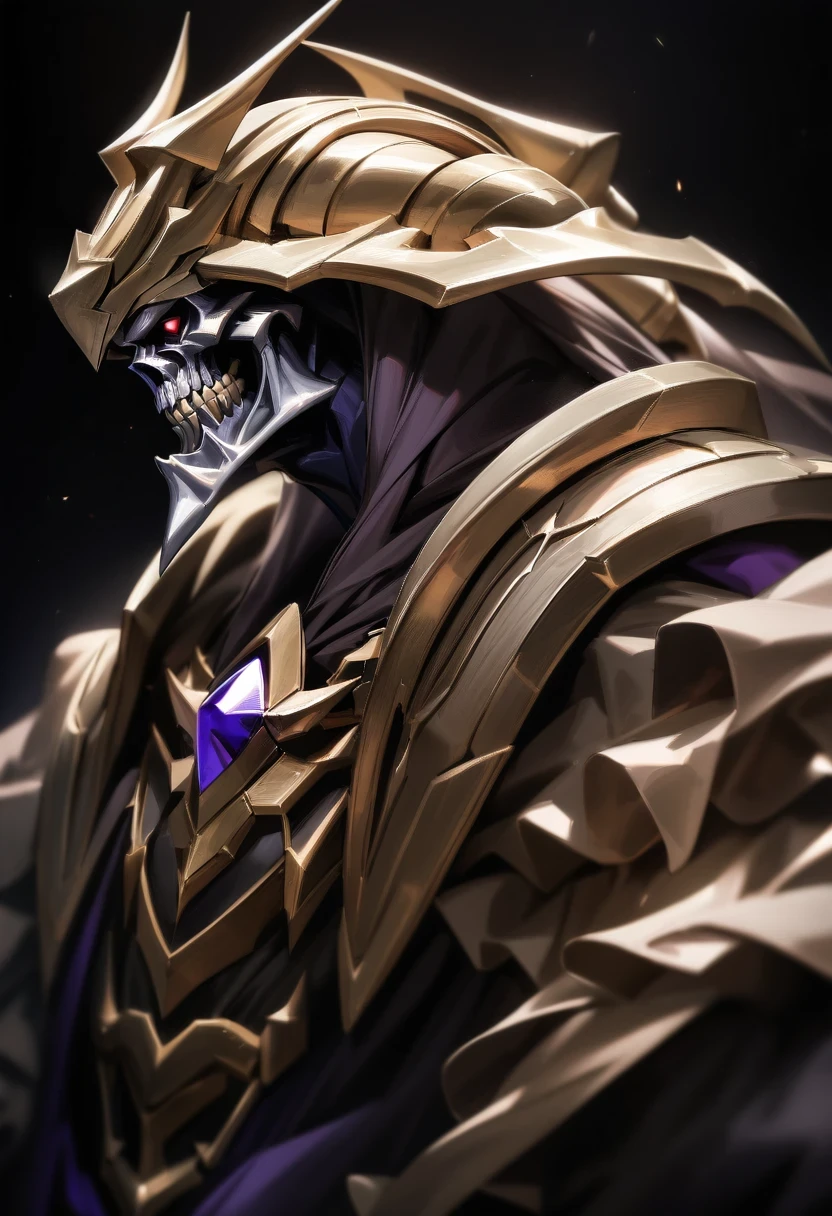

Comparing an authority-based YPS-4 entity to a physical-based YPS-3 caster is a categorical error; their power axes never intersect. One commands the map, the other survives it. The real divergence lies in how these two characters handle the burden of perceived divinity. Ainz is a man wearing a mask of omnipotence that eventually consumes the wearer. His growth is a descent into detachment, where the bureaucratic logic of Nazarick replaces human empathy. He does not evolve; he optimizes. Conversely, Roxy's journey is one of dismantling her own mask. While Rudeus views her as a goddess, her arc focuses on the friction between that idolized image and her genuine insecurities as a Migurd. Her growth is a climb toward emotional intimacy, trading the isolation of a wandering mage for the vulnerability of a family. Ainz uses his power to build a wall between himself and the world, ensuring no one sees the salaryman shaking inside. Roxy uses her knowledge to build bridges, accepting that she is flawed and small. This reveals a fundamental split in the genre: isekai can either be a study in the alienation of total power or a study in the reclamation of self through connection. The distance between a Nation-level tyrant and a City-level teacher is not a gap in strength, but a gap in what they are willing to sacrifice to feel seen.
Archetype breakdowns and dispute court land in later phases.