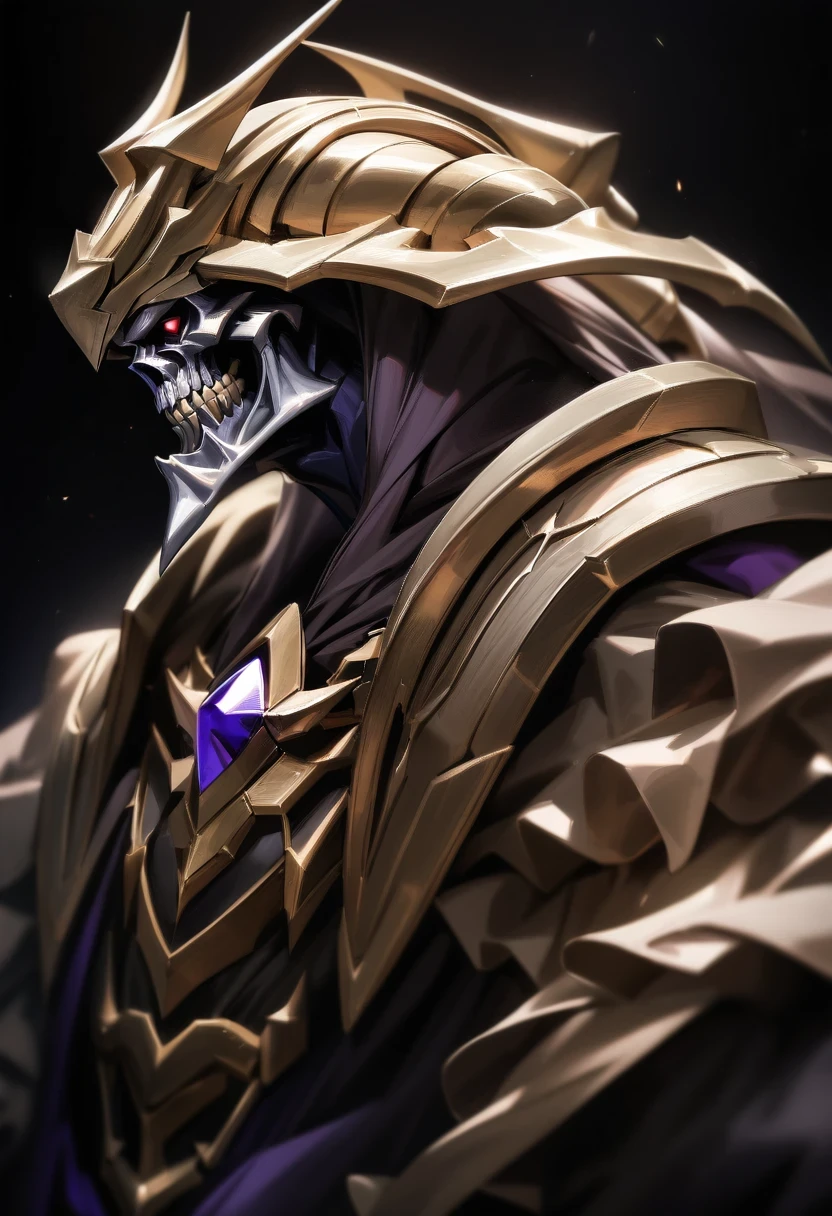

The obsession with total certainty reveals more about a character's fragility than their capability. While both occupy the YPS-4 tier, the comparison breaks down immediately because they operate on perpendicular axes: Ainz wields authority as a social and magical shield, while Seiya relies on physical overkill as a psychological one. This cross-type divide means their power levels are practically irrelevant; the real metric is how they manage risk. Ainz treats the New World as a corporate merger, using his role as a ruler to hide the panic of a middle manager. His authority is a performance designed to prevent the collapse of his social hierarchy. Conversely, Seiya treats Gaeabrande as a lethal simulation where any variable is a potential death sentence. His physical training is not about dominance, but about the erasure of chance, a direct response to the trauma of his failure in Ixphoria. While Ainz’s bonds are constructed through the performative loyalty of subordinates, Seiya’s bonds are forged through the genuine, agonizing process of letting others back into his life. Ainz moves toward a cold, undead detachment, whereas Seiya moves toward a humanized acceptance of vulnerability. The contrast proves that in isekai, the primary oppressive force isn't the magic system or the monster, but the ghosts of the protagonist's former life—whether that is the crushing weight of corporate expectation or the visceral memory of loss.
Archetype breakdowns and dispute court land in later phases.