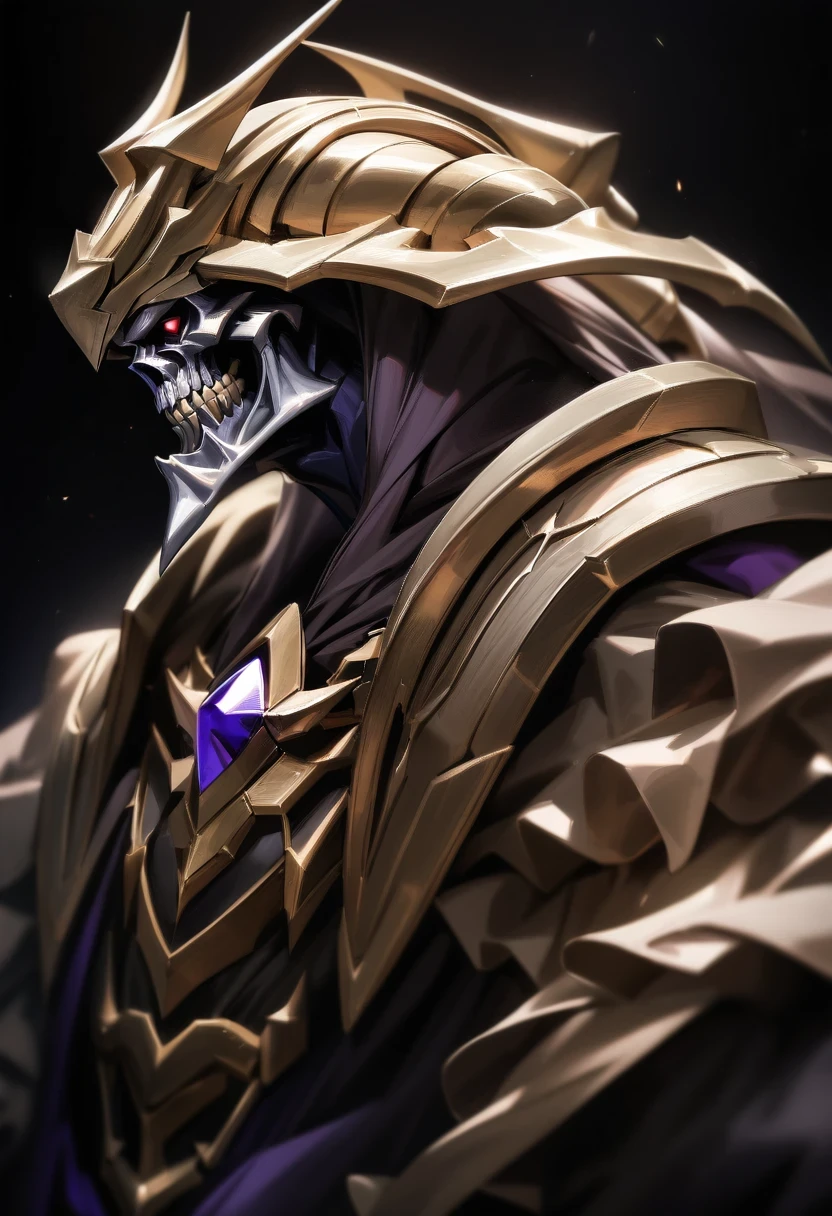

The paradox of the YPS-4 tier is that scale often masks a total divergence in narrative purpose. Comparing these two is a fundamental exercise in cross-type friction; one wields authority as a tool of governance, the other wields physical force as a tool of protection. Because their power operates on different axes—systemic dominance versus destructive output—the shared YPS-4 rating is a coincidence of scale rather than a similarity of function. The real delta exists in the relationship between Ego and Bonds. Ainz operates as a corporate middle manager playing a role, using his authority to maintain a facade of omniscience for the NPCs of Nazarick. His power is a shield for his insecurity, and his narrative trajectory is one of increasing moral detachment. In contrast, Shin possesses high Growth and Bonds but almost no Ego. He does not seek to rule or perform; he is simply a highly optimized weapon for those he loves. Where Ainz uses power to construct a hierarchy that protects his identity, Shin is entirely absorbed by his relationships, making him a passive instrument of his own capability. This reveals a core tension in isekai: power is either a mask used to hide the human inside, or a tool that renders the human irrelevant. Ainz is a man pretending to be a monster to survive his subordinates, while Shin is a prodigy who remains a child because his power removes all necessary friction from his life.
Archetype breakdowns and dispute court land in later phases.