
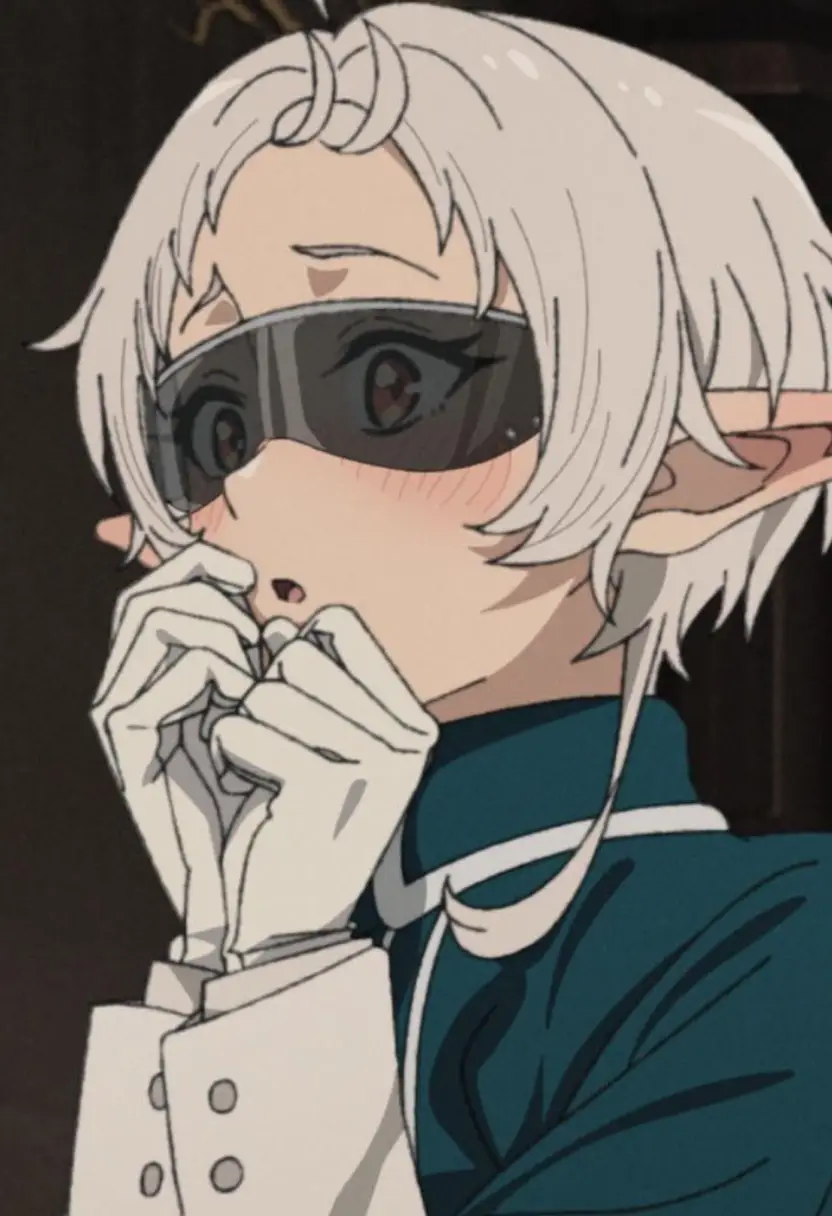
Divine authority and physical mastery operate on such divergent axes that their shared YPS-3 classification is a statistical coincidence rather than a functional equivalence. Because one wields the conceptual laws of a deity and the other utilizes refined magical combat, any direct comparison of their destructive output ignores the fundamental difference in how their power interacts with the world. The real divergence lies in the relationship between innate capacity and the will to evolve. Aqua possesses the raw output of a goddess but lacks the ego to steer it, turning her divine authority into a source of chaos rather than control. She is the embodiment of stagnation, where high power creates a ceiling that prevents any meaningful growth. In contrast, Sylphiette transforms her elven aptitude into a weapon of necessity. Her transition into the persona of Fitts is not about power for power's sake, but a calculated adaptation to survive and support. While Aqua is a deity who acts like a child, Sylphiette is a woman who forced herself to become a soldier to bridge the gap between her and Rudeus. This comparison exposes a core tension in isekai narratives: the difference between power as a status symbol and power as a means of survival. Aqua’s authority is a joke because it requires no effort and yields no character development. Sylphiette’s strength is an achievement because it is born from insecurity and the desire for partnership. One demonstrates that divinity without discipline is a liability; the other proves that agency is the only metric that actually matters in a world of supernatural escalation.
Archetype breakdowns and dispute court land in later phases.