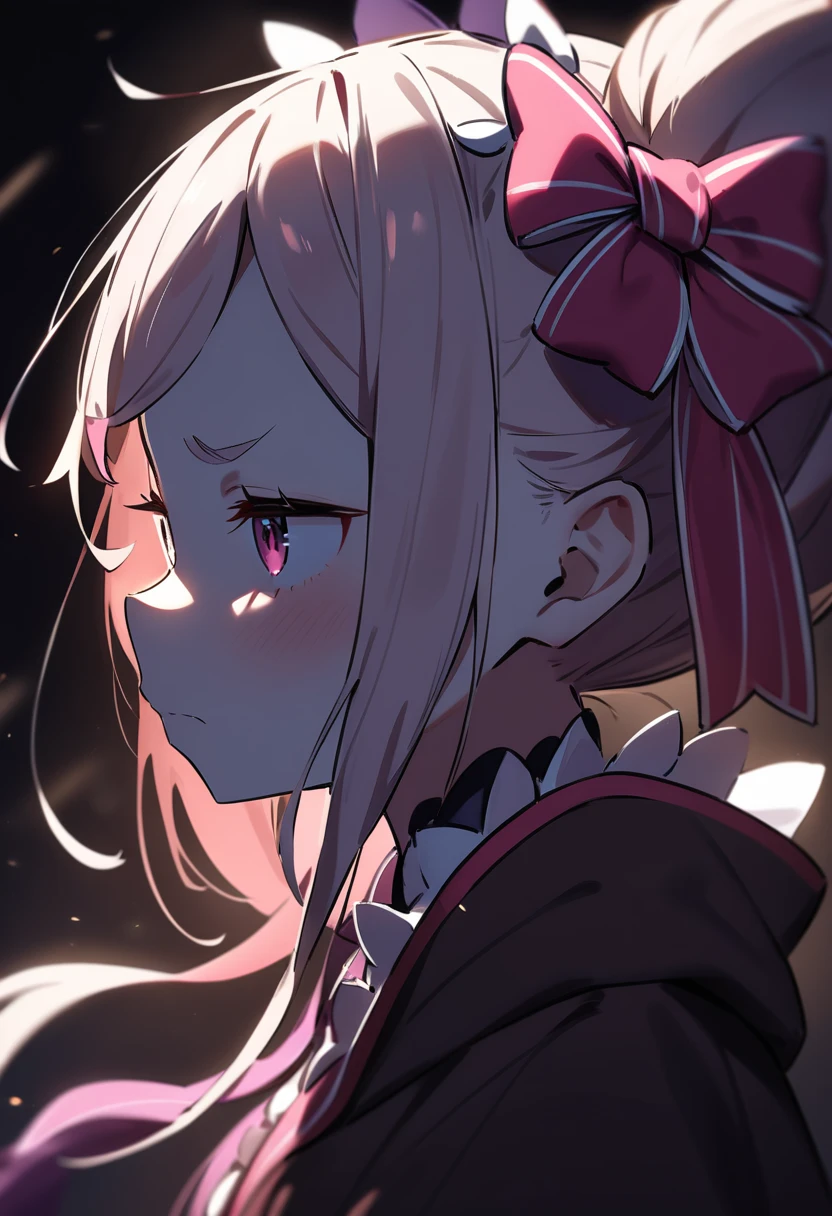

The tension between external utility and internal agency defines the 'companion' archetype, regardless of the scale of their abilities. A direct YPS comparison between Beatrice's YPS-3 authority and Iruma's YPS-2 narrative power is an exercise in futility because their abilities operate on different metaphysical axes; one bends the laws of magic, while the other bends the laws of probability. The real intersection lies in their identical Ego scores of 15. Both characters function as reactors to the will of others, though they process this passivity in opposite directions. Beatrice spends centuries in a self-imposed purgatory, her identity anchored to the ghost of 'That Person' and the rigid constraints of her library. Her growth is a process of recovery, a psychological victory where she sheds the skin of a servant to become a partner to Subaru. Iruma, conversely, operates through a process of invention. Using the Ring of Gluttony not as a weapon but as a shield for his social anxiety, he builds a leadership persona from the ground up. While Beatrice fights to reclaim a lost self, Iruma fights to construct a viable one. Their trajectories reveal that in the isekai genre, the shift from a passive tool to an active agent is a more significant narrative leap than the jump from YPS-2 to YPS-3. The capacity to destroy a city is irrelevant if the character lacks the will to walk out of the room.
Archetype breakdowns and dispute court land in later phases.