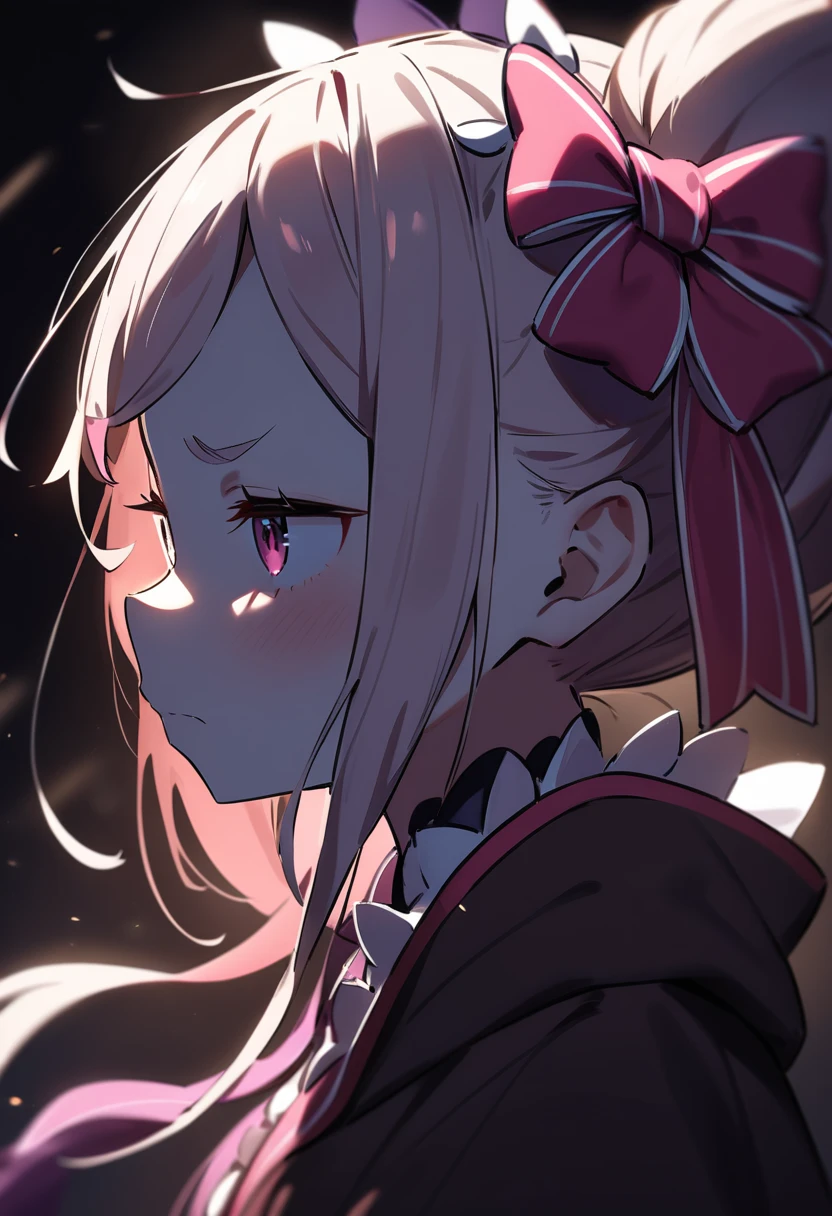

The intersection of power and agency in isekai is often framed as a linear progression, but these two profiles prove that raw capability is frequently an obstacle to personal freedom. While both occupy the YPS-3 tier, the comparison breaks down immediately because their power types—authority versus narrative—operate on different planes. Beatrice's YPS-3 status is a byproduct of ancestral arcane knowledge, whereas Kazuma's is a result of systemic manipulation and high-roll probability. Beatrice represents the tragedy of the over-powered static object; her centuries of waiting in the Forbidden Library illustrate how immense capability becomes a prison when Ego is absent. Her growth is not an increase in mana, but the agonizing process of claiming a will. Conversely, Kazuma utilizes his perceived inadequacy as a tactical advantage. He navigates a world of high-stat anomalies by leveraging his Luck and pragmatism, transforming the role of the 'weak' protagonist into a position of narrative control. One fights to escape the burden of her identity, while the other constructs a new identity from the scraps of a failed life. Their shared YPS tier masks a fundamental divergence: Beatrice’s journey is about the courage to be fragile, while Kazuma’s is about the intelligence to be opportunistic. This reveals that in the isekai genre, significant growth occurs not when a character gains power, but when they stop letting their power—or lack thereof—define their boundaries.
Archetype breakdowns and dispute court land in later phases.