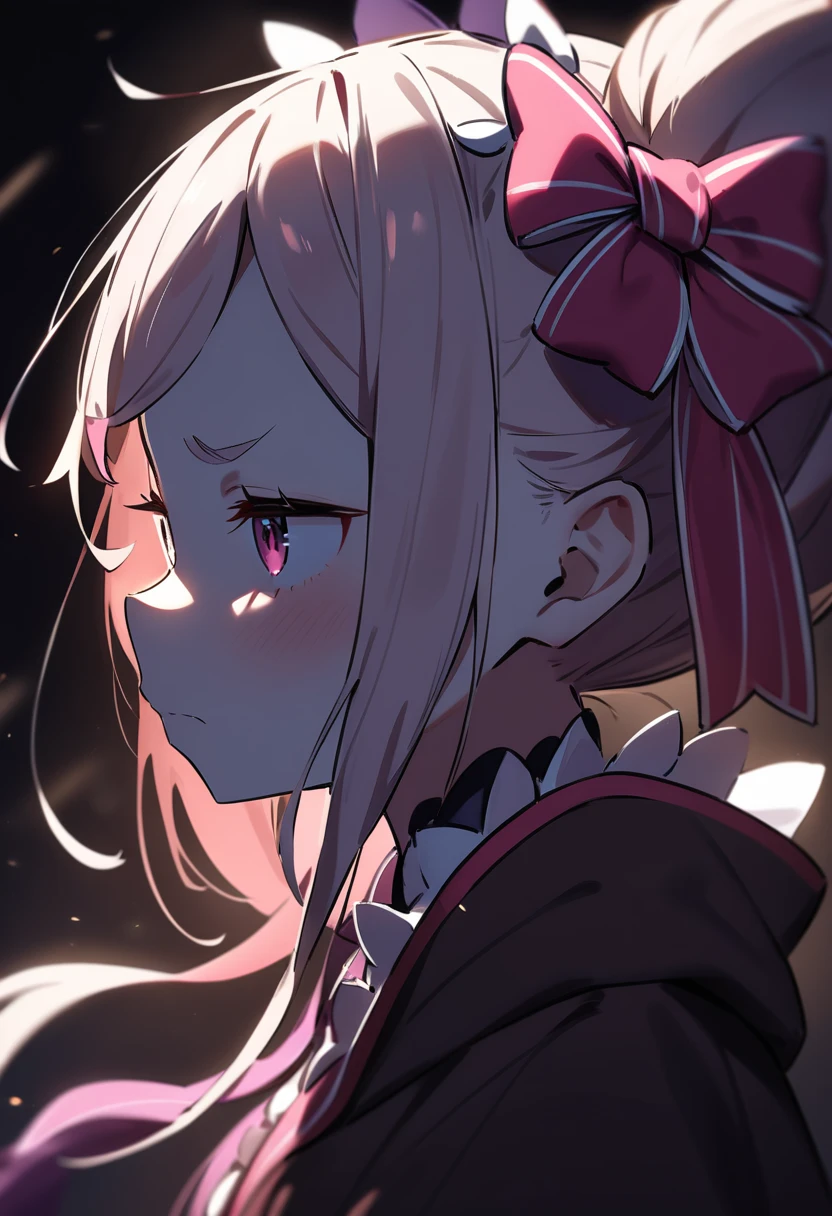

The fundamental tension in isekai power lies in whether a character's abilities serve to liberate the individual or absorb them into a role. Comparing a YPS-3 Authority to a YPS-7 Hybrid renders traditional combat metrics useless, as the scale of a city-level spirit is irrelevant against a world-ender capable of rewriting physical laws. Instead, the real divergence appears in how power interacts with the ego. For Beatrice, power is a stagnant burden. Her centuries of arcane mastery are a byproduct of a self-imposed purgatory, where her abilities serve only to maintain a lonely vigil for 'That Person.' Her arc is a psychological victory; she trades the safety of her library for the vulnerability of a contract with Subaru, proving that emotional fragility is the catalyst for true agency. Rimuru operates on the opposite axis. There is no internal struggle or moral cost because Rimuru functions as a corporate entity. The transition to an Ultimate Slime is an exercise in additive efficiency, not personal growth. While Beatrice fights to become a person, Rimuru evolves into a system. Rimuru's lack of ego is not a virtue but a strategic asset that allows for the seamless construction of a geopolitical federation. One character uses power to escape a role, while the other uses power to become the role itself. This reveals a sharp divide in the genre: power as a means of emotional reclamation versus power as a tool for systemic administration.
Archetype breakdowns and dispute court land in later phases.