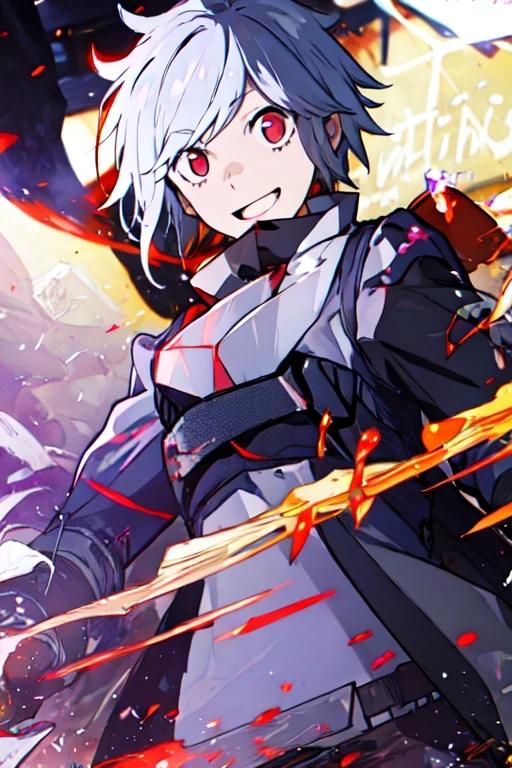
The fundamental tension in isekai lies in whether power is a tool for transformation or a reward for existing. Comparing a YPS-3 physical combatant to a YPS-S authority figure is a categorical error; one fights within the physics of a dungeon, while the other rewrites the laws of a universe. The real divergence appears in their DNA profiles regarding Ego and Darkness. Bell’s trajectory is defined by friction. His growth requires a moral cost, forcing him to kill sentient monsters to protect his bonds, which imbues his journey with genuine stakes. He earns his maturity through the agony of compromise. Conversely, Touya represents the erasure of friction. His ascent to godhood is an administrative process, not a personal evolution. With an Ego score of zero, he does not drive his story so much as he allows the world to be curated around him. While Bell struggles to reconcile his kindness with the brutality of the Dungeon, Touya simply removes the brutality. One is a study in the cost of heroism, the other is a study in the luxury of omnipotence. The gap is not in their YPS tiers, but in the presence of a soul struggling against its environment.
Archetype breakdowns and dispute court land in later phases.