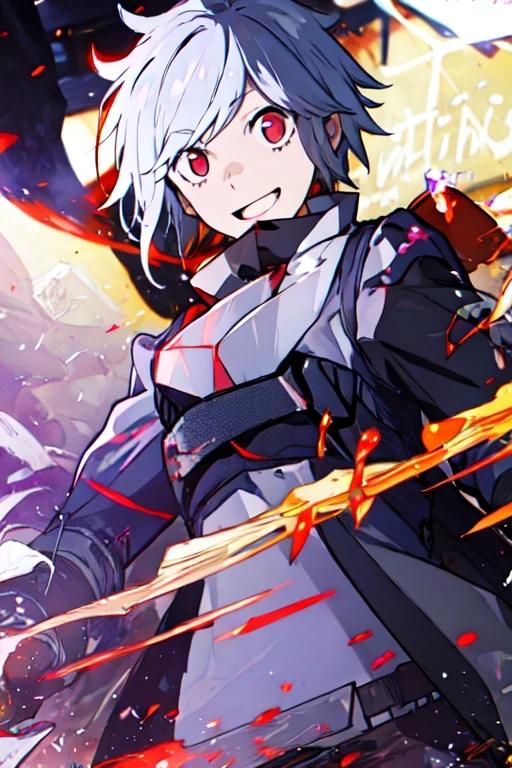

The divide between these two profiles exposes the fundamental friction between narrative ascension and systemic endurance. While Bell Cranel represents the hyper-accelerated growth of a protagonist who bends the world to his will, Viktoriya Serebryakov exists as a static constant in a world that treats individuals as expendable resources. This is not a fair fight in terms of raw output—the jump from YPS-2 to YPS-3 marks a transition from a superhuman soldier to a strategic asset capable of city-level devastation—but the real divergence lies in their Ego scores. Bell’s trajectory is an aggressive climb fueled by romantic obsession, turning his internal desire into a mechanical advantage. In contrast, Visha’s zero Ego score reflects a total surrender to the military machine. She does not seek to evolve or transcend her station; she finds her value in maintaining the mundane stability of Tanya’s battalion. Where Bell risks his life to prove his worth as a hero, Visha risks hers simply to perform her duty with professional competence. This comparison highlights a brutal truth about isekai dynamics: the hero grows because the plot demands a peak, while the support survives by becoming invisible to the plot. Bell’s struggle is against the Dungeon’s monsters, but Visha’s struggle is against the erasure of her own identity within a total war economy. One is a catalyst for change; the other is a witness to it.
Archetype breakdowns and dispute court land in later phases.