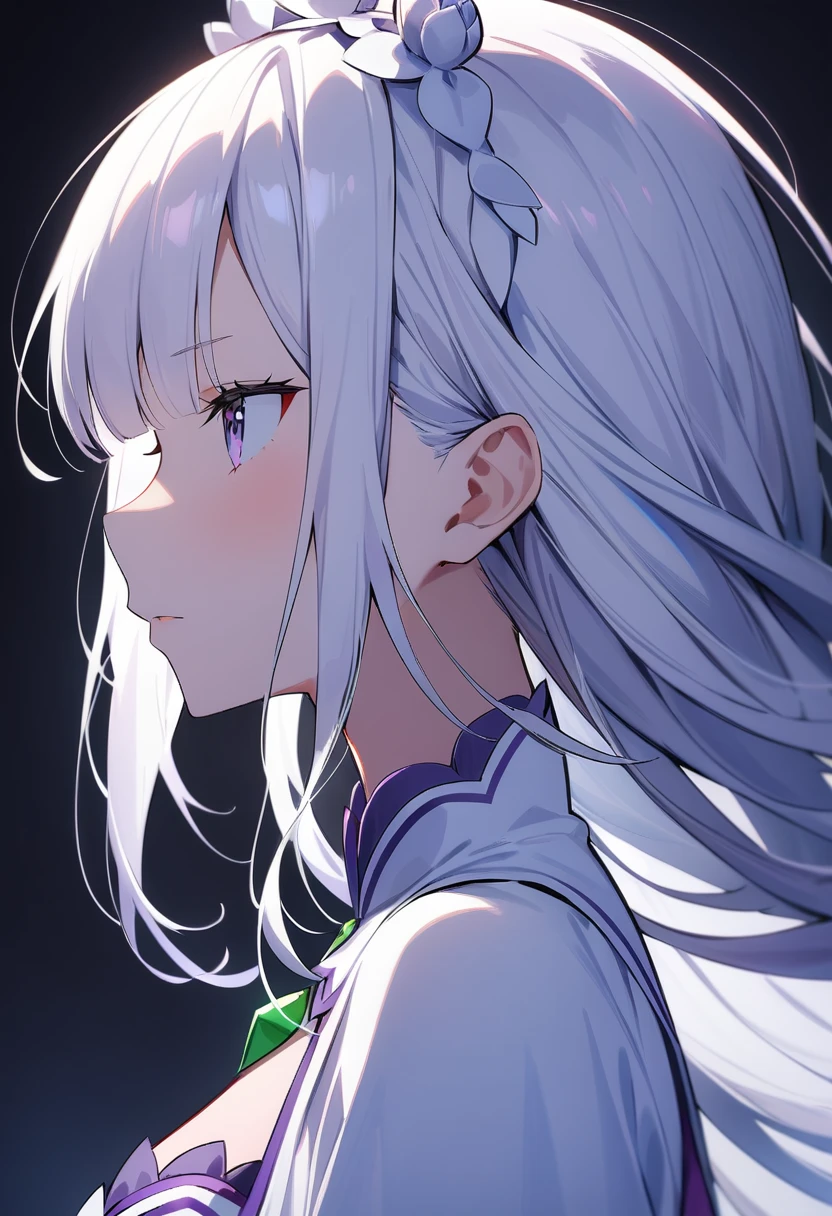

Agency in isekai is often a gift, but for some, it is a burden imposed by others. Comparing a YPS-4 physical powerhouse to a YPS-2 narrative survivor is fundamentally flawed because their abilities operate on different axes. The real tension lies in their shared struggle with Ego. Both characters enter their stories as passive recipients of fate, driven by external pillars rather than internal will. Emilia's journey is a fight for the right to exist without the shadow of the Witch, while Iruma's is a fight to maintain his humanity while being propelled toward the demon throne. This reveals a specific isekai trope: the accidental leader whose growth is a reaction to pressure rather than a pursuit of power. Emilia's shift from a fragile girl relying on Puck to a candidate for the Royal Selection mirrors Iruma's transition from a terrified student to a protector of his peers. However, their paths diverge in the cost of their growth. Emilia pays in social isolation and the trauma of systemic hatred. Iruma pays in a loss of anonymity, where his narrative protection acts as a gilded cage that forces him into the spotlight. Ultimately, the gap between their YPS tiers is irrelevant because their story functions are identical. They are both mirrors reflecting the expectations of their respective worlds, proving that the most significant growth happens when a character finally decides who they want to be, regardless of the power scale.
Archetype breakdowns and dispute court land in later phases.