
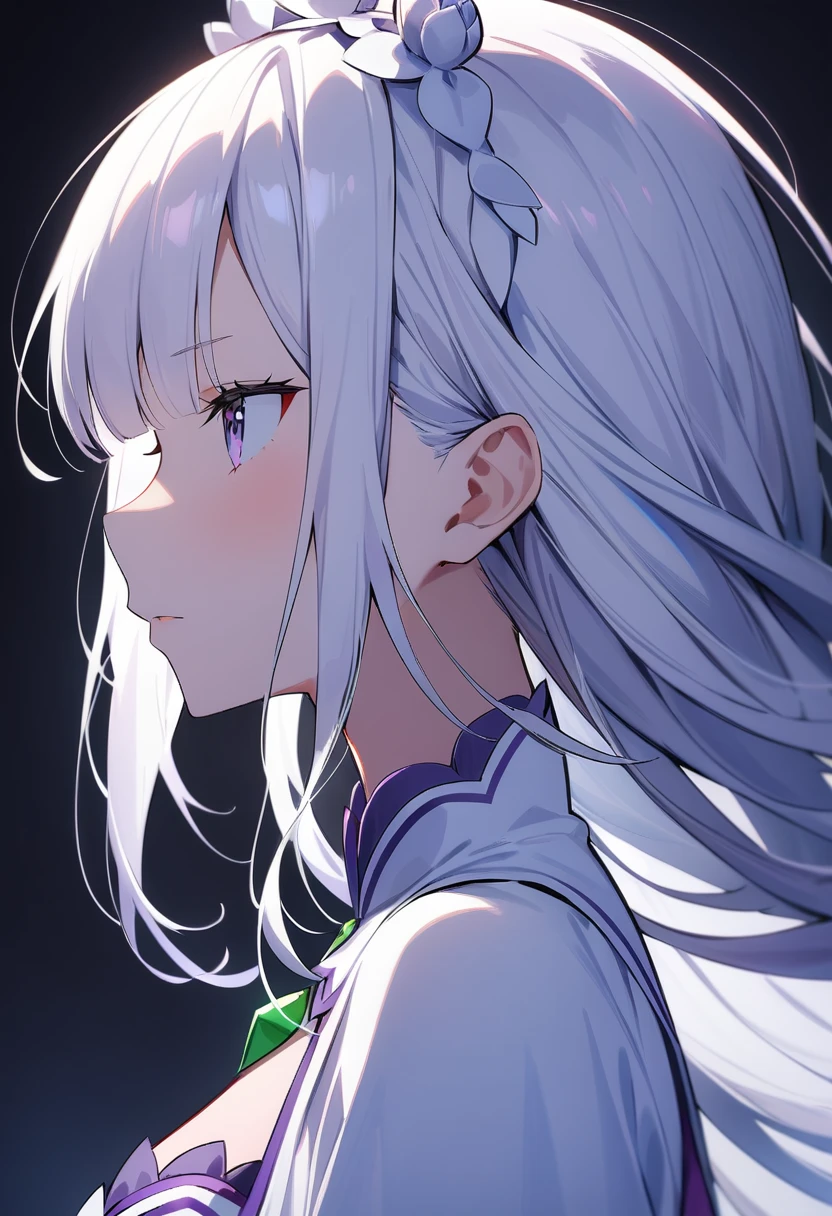
The disparity between innate capacity and actualized agency reveals a fundamental truth about the "strong female lead" in isekai: power is often a cage rather than a tool. While the gap between a YPS-3 city-level combatant and a YPS-4 nation-level entity suggests a clear hierarchy of utility, the real tension lies in the direction of their trajectories. Eris represents a violent ascent, abandoning the safety of her nobility to undergo years of brutal training because she refused to be a secondary character in her own life. Her growth is a conscious choice to close a gap in competence. Conversely, Emilia’s journey is one of excavation. She begins with an overwhelming ceiling of power that she is conditioned to suppress or ignore, making her growth a process of shedding psychological shackles rather than gaining new skills. Eris fights to become a sword; Emilia fights to stop being a mirror for others' fears. This creates a paradox where the character with the lower YPS tier possesses a more decisive sense of self-determination. Eris’s decision to leave the person she loves to master the blade is an act of extreme ego, whereas Emilia’s struggle to lead the Royal Selection is a battle against a world that has already decided who she is. One builds a fortress from nothing, while the other learns to live inside a fortress she didn't know she owned.
Archetype breakdowns and dispute court land in later phases.