
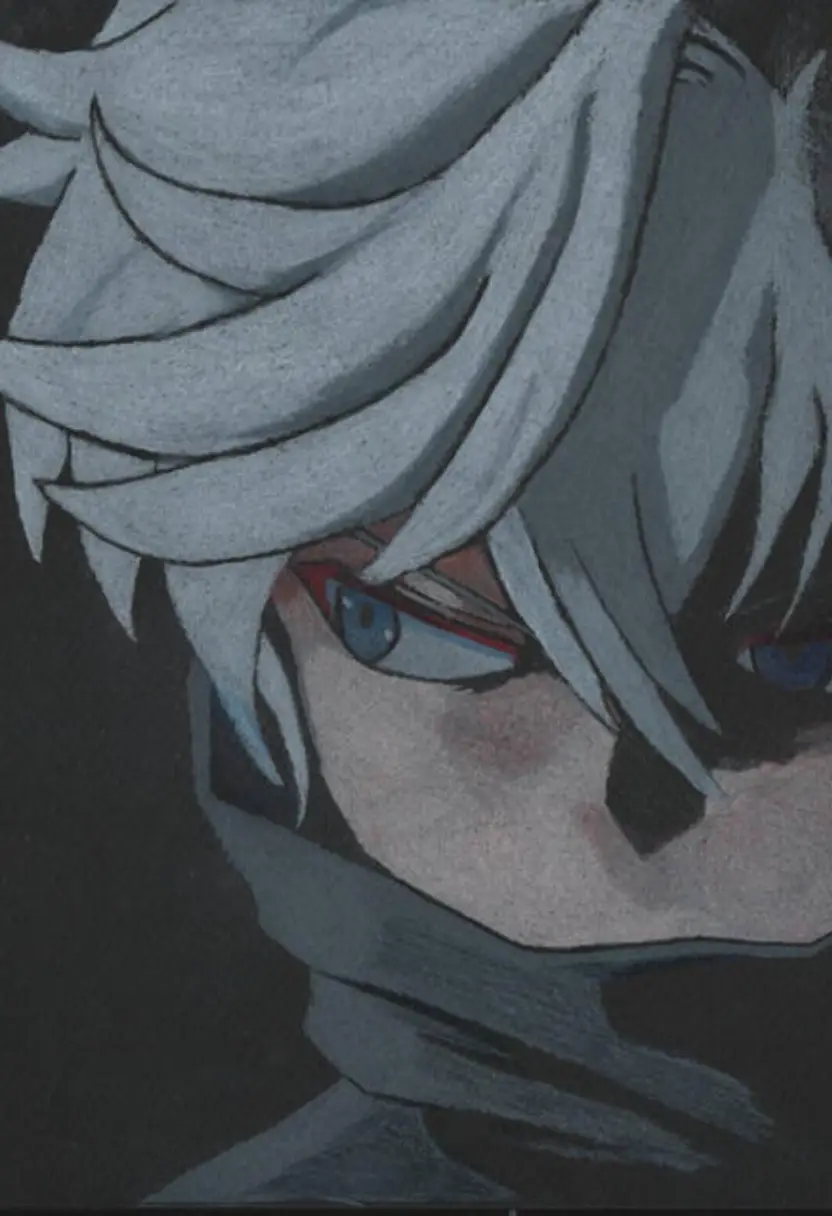
The fundamental difference between two YPS-3 combatants is not how they hit, but why they train. One treats power as a bridge to emotional parity, while the other treats it as a shield against vulnerability. For Eris, the decision to vanish into the sword-sanctums of the Holy Land of Swords is an act of profound insecurity masquerading as ambition. She recognizes that her innate talent is insufficient to stand beside Rudeus as an equal, and she spends years in grueling isolation to erase that gap. Her growth is an emotional imperative; she transforms her body into a weapon so her heart no longer feels small. Conversely, Lugh approaches his YPS-3 capabilities as a series of optimization problems. His mastery over mana and assassination techniques is not a quest for self-worth, but a requirement for professional survival. Where Eris sheds her noble identity to find her true self, Lugh meticulously constructs a new identity to hide his true nature. The divergence in their DNA profiles—specifically the gap between Eris’s high bond weight and Lugh’s higher ego—reveals a stark truth: Eris uses the blade to reach someone, while Lugh uses the blade to keep the world at a manageable distance. One is a story of a wild heart learning discipline to save a relationship; the other is a story of a disciplined mind learning emotion to save a soul.
Archetype breakdowns and dispute court land in later phases.