
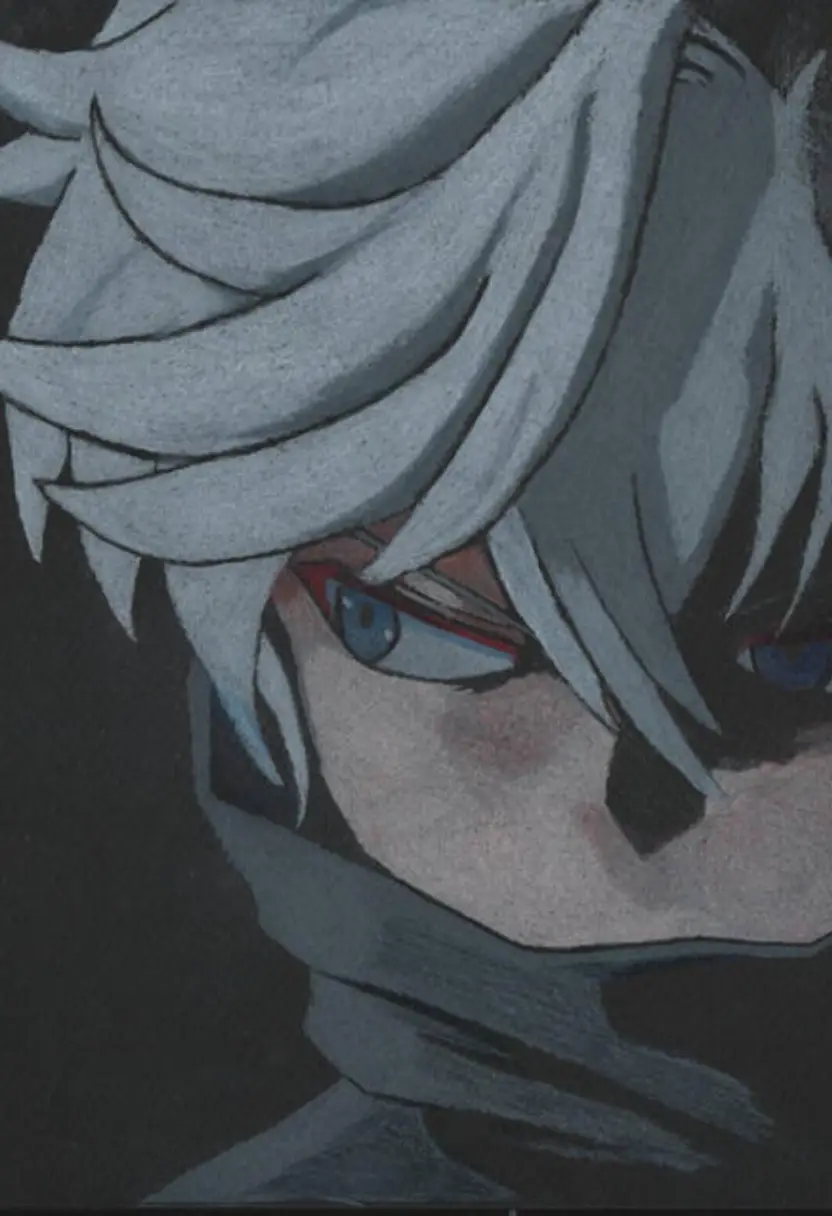
True agency in an isekai setting is often mistaken for raw output, but the gap between a YPS-3 and a YPS-7 is where the primary psychological friction occurs. While Hajime Nagumo operates on a scale that can rewrite physical laws, his narrative is one of completion—a survivor who has already decided exactly who he is after the trauma of the Orcus Labyrinth. Lugh Tuatha Dé, conversely, exists in a state of constant, clinical negotiation with his own identity. Lugh possesses the technical precision of a master assassin, yet he remains a prisoner to the mindset of a tool, treating his second life as a series of optimization problems rather than an existential rebirth. This creates a paradox where the character with lower destructive capacity carries the heavier narrative burden. Hajime’s journey is a linear ascent toward total sovereignty, leaving little room for internal conflict once he rejects the gods of his world. Lugh’s struggle to integrate human emotion into his tactical calculus—specifically his clumsy attempts to value Dia and Tarte beyond their utility—offers a deeper study of the cost of efficiency. The tension is not about who wins a fight, but about who is actually evolving. Hajime’s growth is an escalation of power to protect a closed circle; Lugh’s growth is a desperate attempt to manufacture a soul from the remnants of a disposable life. In the end, the YPS-7 powerhouse is a finished product, while the YPS-3 assassin is a work in progress, making the latter the more vital character study.
Archetype breakdowns and dispute court land in later phases.