
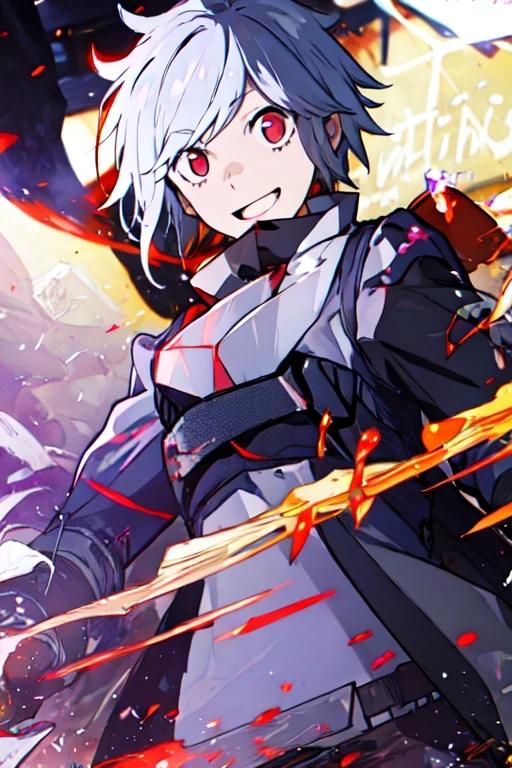
The divergence between these two YPS-3 combatants lies in whether destructive capacity serves as a tool for connection or a manifesto of identity. Bell treats his ascent toward city-level capability as a desperate race, using his rapid growth to bridge the gap between a naive rookie and the veterans he admires. His power is reactive and social, fueled by a romantic obsession that forces him to reconcile his inherent kindness with the blood on his hands in the Dungeon. Megumin, conversely, treats her YPS-3 output as a rigid aesthetic choice. She rejects the versatility typical of the genre, opting for a single, catastrophic spell that renders her useless immediately after firing. Her power is not a bridge to others but a wall she builds around her own eccentricity. While Bell’s DNA profile reveals high growth and bonds, Megumin’s stagnation in utility is a deliberate act of rebellion against optimization. One fights to belong; the other fights to remain an outlier. The tragedy of Bell is that he must abandon his innocence to gain power, while the comedy of Megumin is that she sacrifices all practicality to preserve her pride.
Archetype breakdowns and dispute court land in later phases.