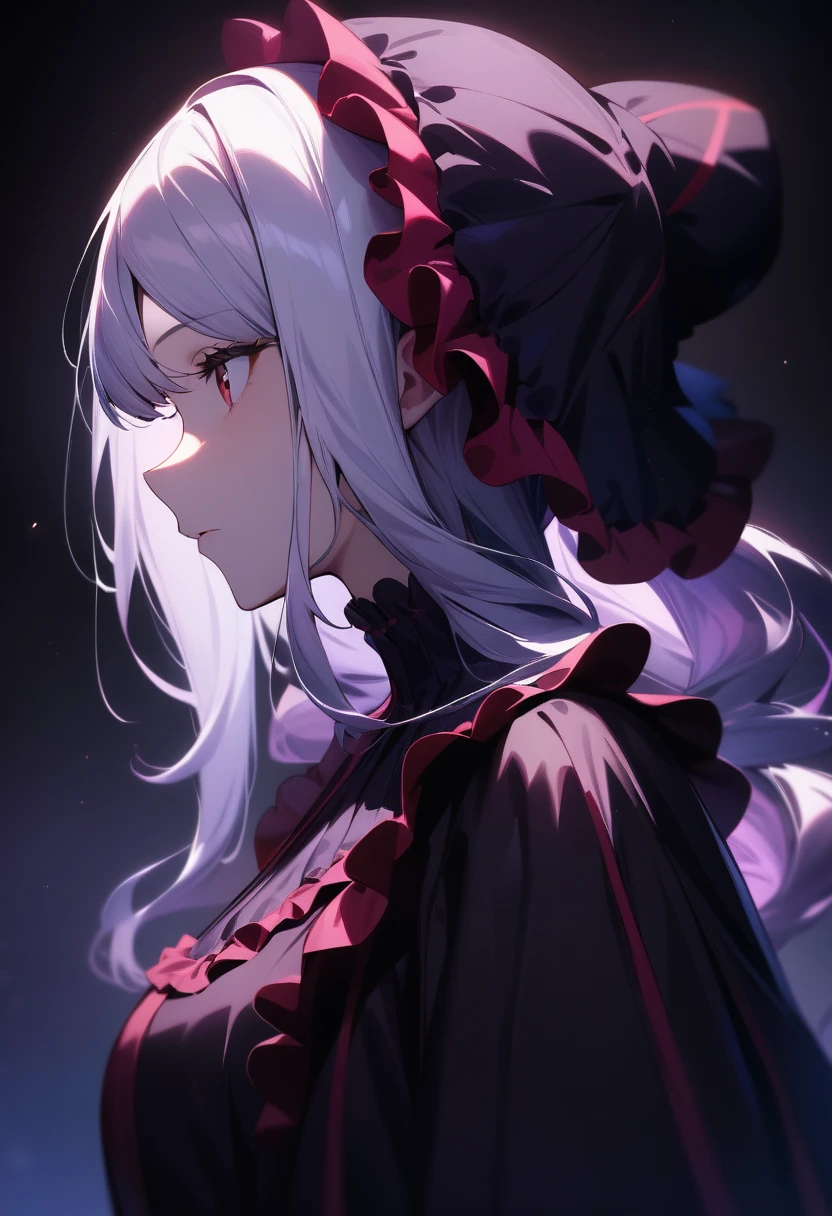
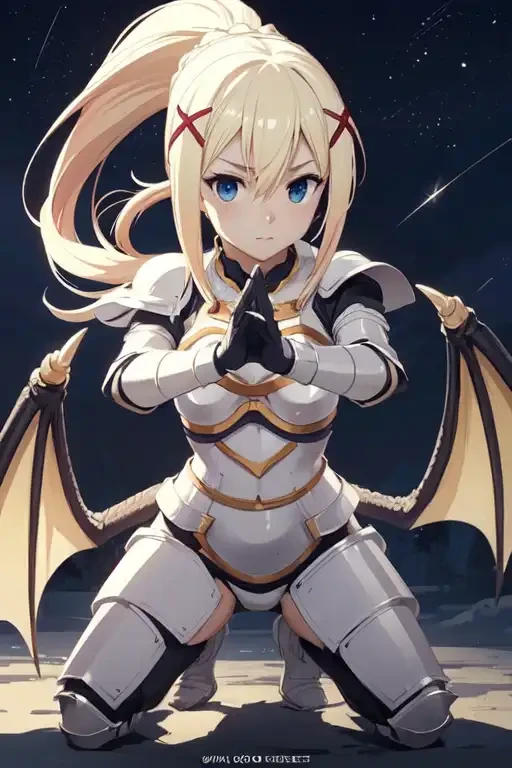
The contrast between these two reveals how the isekai genre weaponizes masochism to define personal agency. While both characters lean into submissive archetypes, the divergence in their DNA scores—specifically in Ego and Growth—highlights a fundamental shift in how creators treat servitude. Darkness operates as a flat, static existence whose masochism is an internal compulsion, essentially a tragic performance of nobility that yields zero growth because she is bound by her own desires. She is a prisoner of her own archetype. Shalltear, conversely, experiences a brutal narrative forced growth that breaks her static nature. Her struggle to recover from mind control and prove her utility to Ainz transforms her from a programmed weapon into a deeply insecure, developing entity. The tension here isn't about their combat capability; it is about the cost of being an instrument. Darkness chooses her suffering as a way to maintain her identity, whereas Shalltear is terrified by the prospect of losing hers through failure. One is a parody of a crusader defined by a self-imposed gag, while the other is a tragic reflection of an NPC grappling with the reality of being an artifact of an absent god. Side-by-side, they prove that while one character uses masochism to ground herself in her world, the other uses it to survive in a hierarchy that does not care if she lives or dies.
Archetype breakdowns and dispute court land in later phases.