
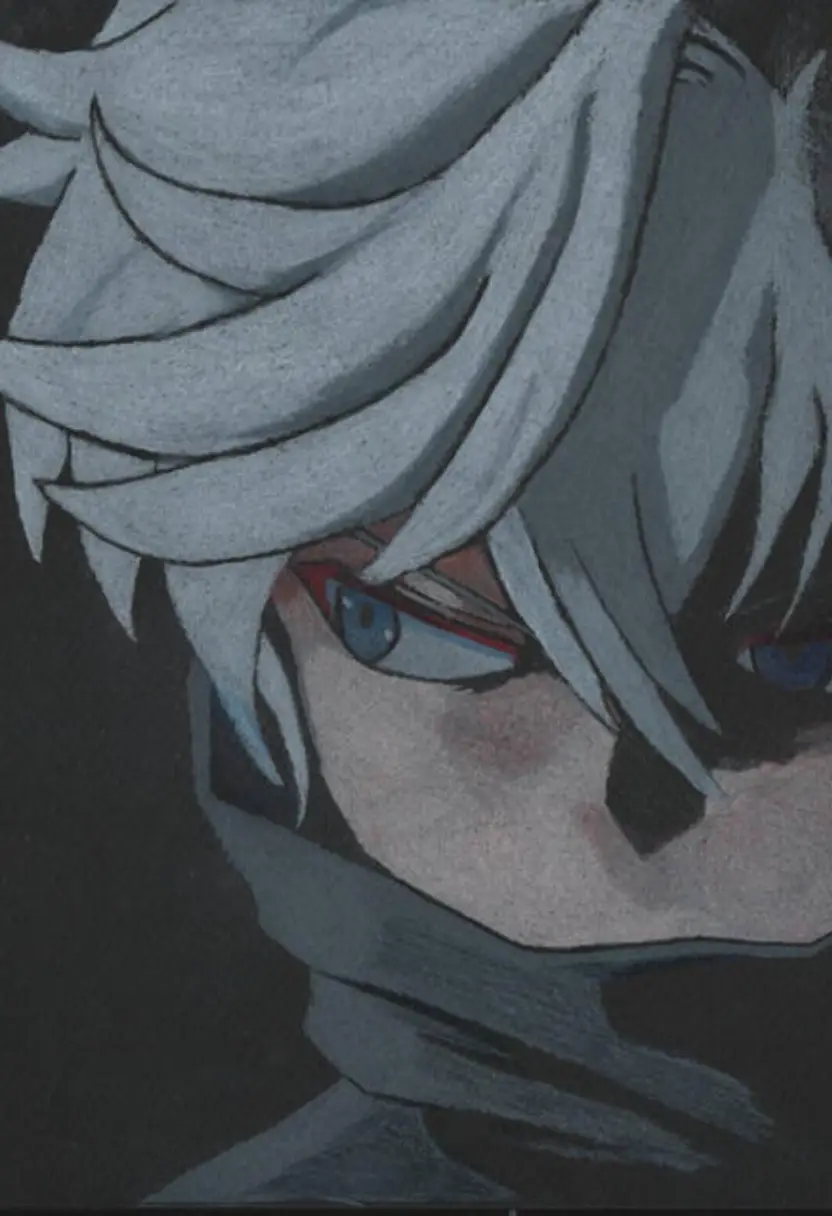
The disparity between a tactical asset and a strategic deterrent reveals that growth in reincarnation narratives is often a trade-off between identity and utility. While both characters share a maximum growth trajectory, they move in opposite directions. Lugh operates at YPS-3, treating his existence as a high-stakes optimization problem where every interaction with Dia and Tarte is a calculated step toward manufacturing a soul. His higher Ego score reflects this conscious struggle to transcend his nature as a tool. In contrast, Shin exists at YPS-4, not because of a superior will, but because his low Ego allows him to absorb the world's expectations without friction. He does not manufacture a soul; he simply occupies the space of a prodigy. This comparison breaks down when analyzing the nature of their impact. Lugh is a precision instrument designed to remove a specific target, meaning his power is measured by efficiency. Shin is a walking deterrent whose very presence alters national security. The tension lies in the fact that Lugh's struggle for humanity makes him more complex, yet less impactful on the global scale than Shin's naive competence. Lugh fights to become a person while possessing the tools of a god, whereas Shin is a person who happens to possess the tools of a god. The data suggests that the ability to reshape a nation is easier to achieve when the character lacks the self-awareness to question why they are doing it.
Archetype breakdowns and dispute court land in later phases.