
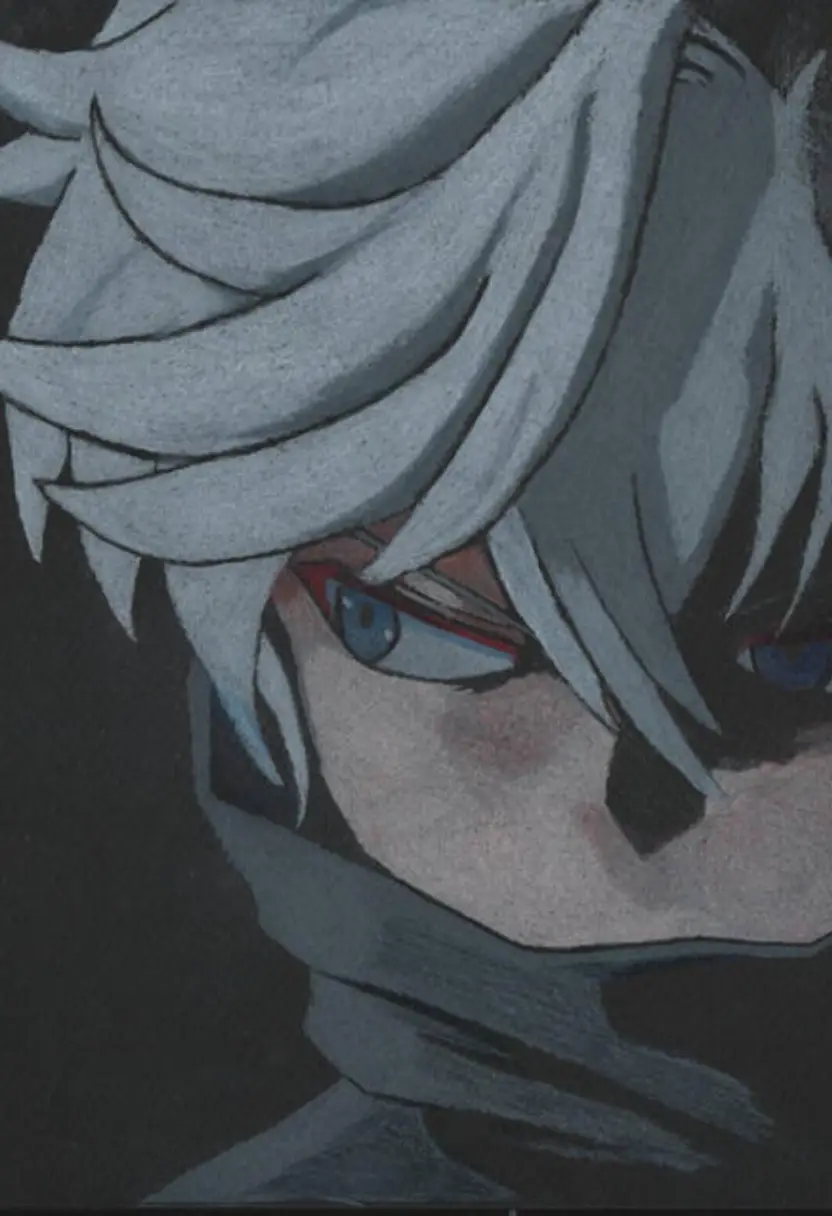
The illusion of a power gap vanishes when comparing a tactical engine to a logical processor. Because Lugh operates on a physical axis (YPS-3) and Shiro on an authority axis (YPS-1), their YPS tiers provide no meaningful combat data. Instead, the real friction lies in how they perceive the system of their respective worlds. Lugh treats his reincarnation as an optimization problem, refining mana output and leveraging skills like 'My Loyal Knights' to manufacture a version of humanity that serves his mission. He is a master of execution who believes that sufficient growth and efficiency can eventually purchase a soul. Shiro, conversely, does not seek to optimize her place within a system but to dismantle the logic of the game entirely. Her zero Ego score reflects a total surrender of self to the collective identity of Blank, proving that while Lugh fights to transition from a tool to a person, Shiro finds her only stability by remaining a precise, specialized component. Lugh's journey is an ascent toward individuality through discipline, whereas Shiro's existence is a surrender to symbiotic brilliance. One uses the world as a workshop to build a self; the other uses the world as a board to prove a theorem. This contrast exposes the genre's divide between the builder protagonist who iterates on their own nature and the solver protagonist who remains static because they are already the answer.
Archetype breakdowns and dispute court land in later phases.