
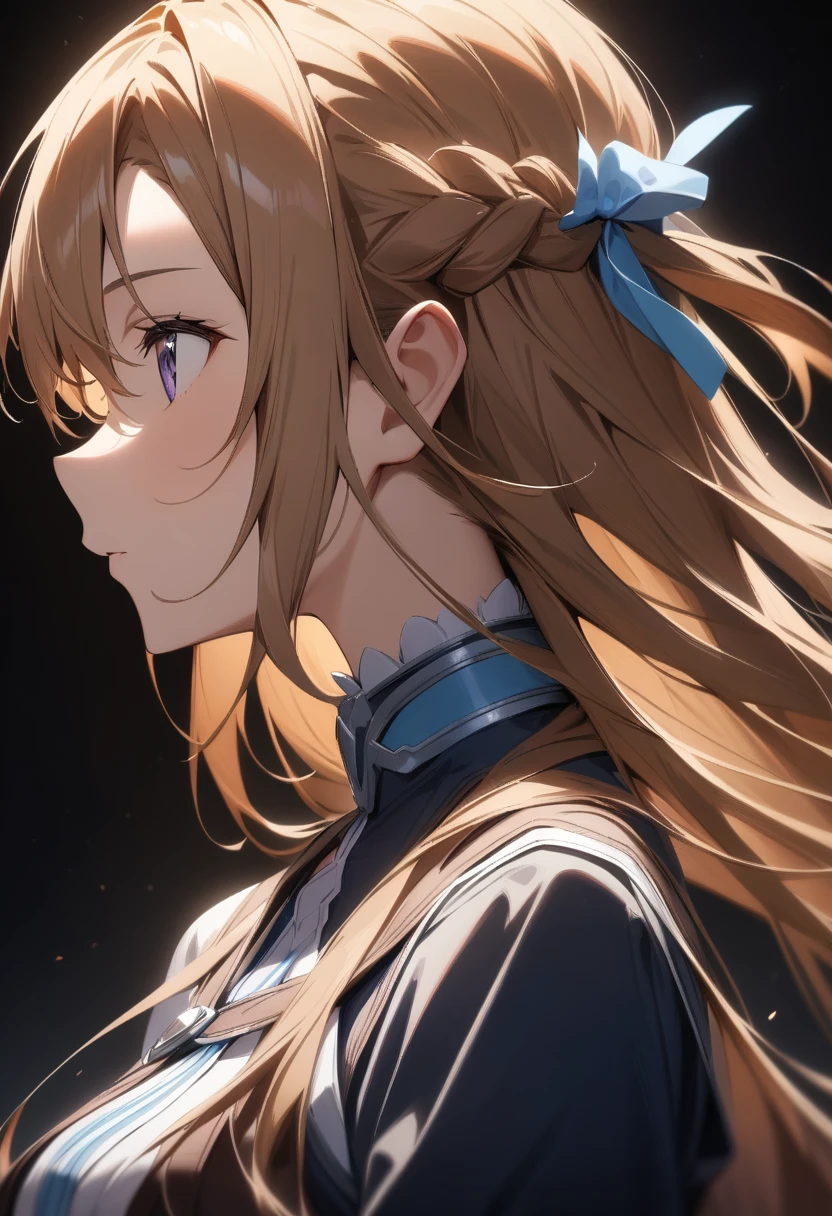
True agency in a simulated world stems from the ability to redefine the rules rather than the capacity to master them. Comparing these two is fundamentally a cross-type exercise; one operates on the axis of physical destruction while the other operates on systemic authority. Consequently, the YPS gap between a YPS-4 and a YPS-2 is a distraction. Asuna represents the ceiling of tactical execution, using her rapier to carve a path through the Aincrad hierarchy, but her power remains reactive to the game's existing laws. In contrast, Shiroe treats those laws as a canvas. While Asuna’s narrative trajectory focuses on the transition from fragility to fortitude, Shiroe’s arc is about the transition from isolation to infrastructure. The high Power scores for both reflect different peaks: one is the ceiling of a combatant, the other is the ceiling of an architect. Asuna’s bonds are forged in the heat of survival, yet Shiroe’s bonds are the very bricks used to build the Round Table Council. This reveals a core truth about the isekai genre: the defining characters are not those who can defeat an army, but those who can make an army unnecessary. Shiroe’s lack of narrative protection—evidenced by his low Luck—forces a reliance on intellectual rigor that makes Asuna’s physical dominance look like a luxury. The struggle for survival is a fight; the struggle for civilization is a negotiation.
Archetype breakdowns and dispute court land in later phases.