
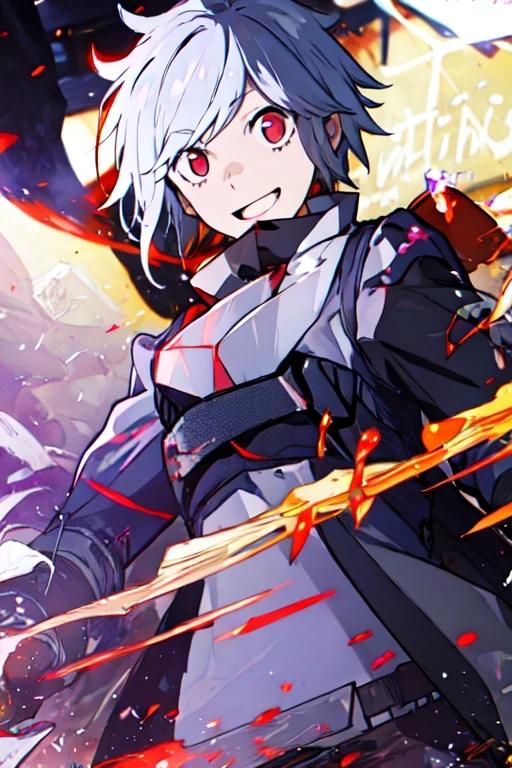
True power in isekai often masks a deeper struggle with autonomy, a reality highlighted by the categorical divide between physical combat and systemic authority. Comparing a YPS-3 physical powerhouse to a YPS-1 intellectual strategist is a structural mismatch; one destroys walls while the other rewrites the rules of the room. However, the divergence in their DNA profiles reveals that the ability to manipulate a world is distinct from the ability to command oneself. Bell’s trajectory is defined by a high Ego score, where his obsession with Ais Wallenstein serves as a catalyst for rapid, conscious evolution. He transforms his vulnerability into a tactical asset, choosing to endure the brutality of the Dungeon to bridge the gap between his current self and his ideal. In contrast, Sora operates as a genius trapped by his own architecture. Despite his dominance in game theory and the Ten Pledges of Disboard, his low Ego score exposes a critical failure in self-determination. His brilliance is not a tool for personal growth but a shield for emotional fragility, rendering him entirely dependent on Shiro to function. While one character uses his bonds to ascend, the other uses them as a crutch to avoid the terror of isolation. This comparison proves that the primary gap in an isekai narrative is not the distance between power tiers, but the distance between those who grow for themselves and those who only exist in tandem with another.
Archetype breakdowns and dispute court land in later phases.