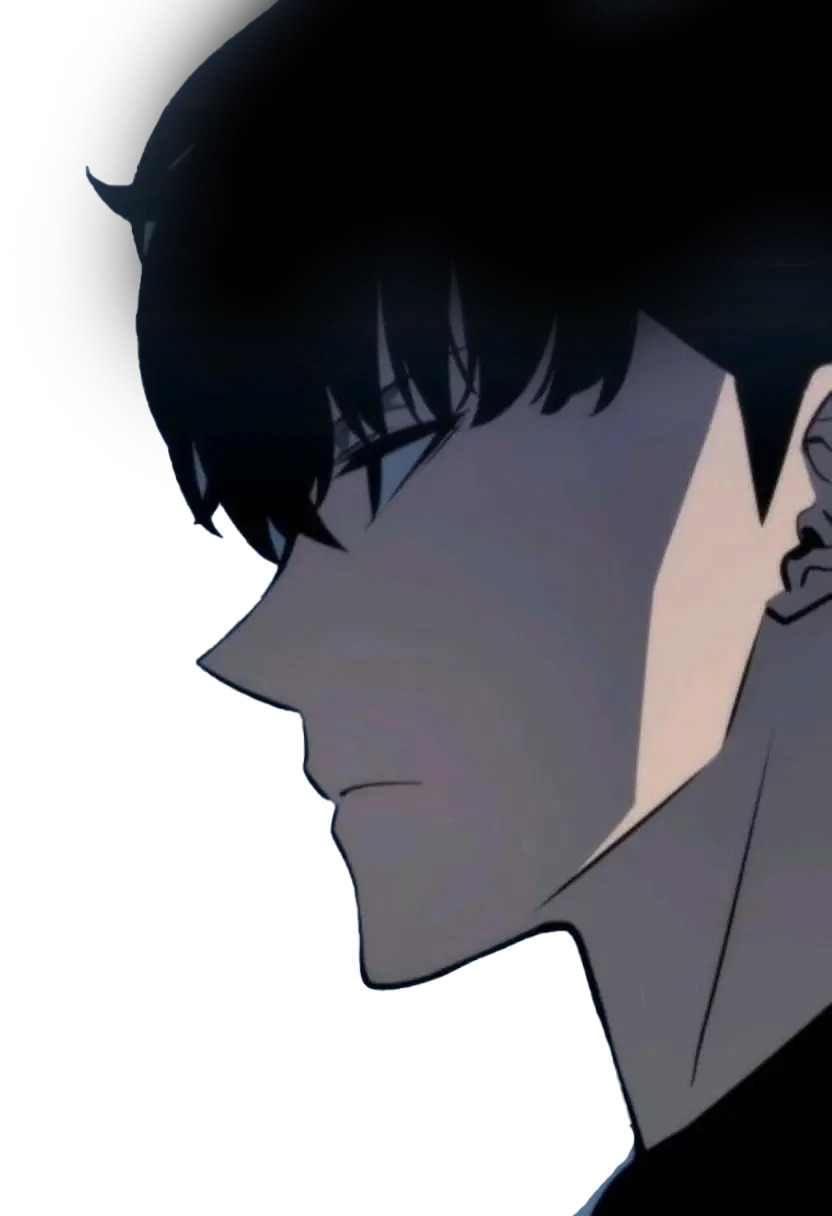

The fundamental tension in isekai resides not in the scale of power, but in whether that power serves to isolate the individual or connect them to others. A direct YPS comparison is functionally irrelevant here, as the gap between a YPS-2 physical combatant and a YPS-6 hybrid entity is too wide for tactical analysis. Instead, the real divergence lies in the direction of their growth. Sung Jinwoo’s trajectory is a linear ascent toward singular Ego. He treats his world as a system to be solved, transforming from the "weakest" hunter into a monarch who views kindness as a liability. His growth is a process of shedding humanity to achieve stability, effectively using his power to build a wall between himself and a cruel world. Rem’s growth operates in the opposite direction; it is a psychological reconstruction. Her struggle is not against external monsters, but against the shadow of Ram and her own perceived defects. While Jinwoo conquers his environment to ensure safety, Rem conquers her self-loathing to offer unconditional loyalty to Subaru. This comparison exposes the genre's dual nature: the fantasy of complete control versus the necessity of vulnerability. One character scales his power to stop being a victim, while the other accepts her limitations to become an emotional anchor. The result is a stark contrast between power as a means of sovereignty and power as a means of service.
Archetype breakdowns and dispute court land in later phases.