
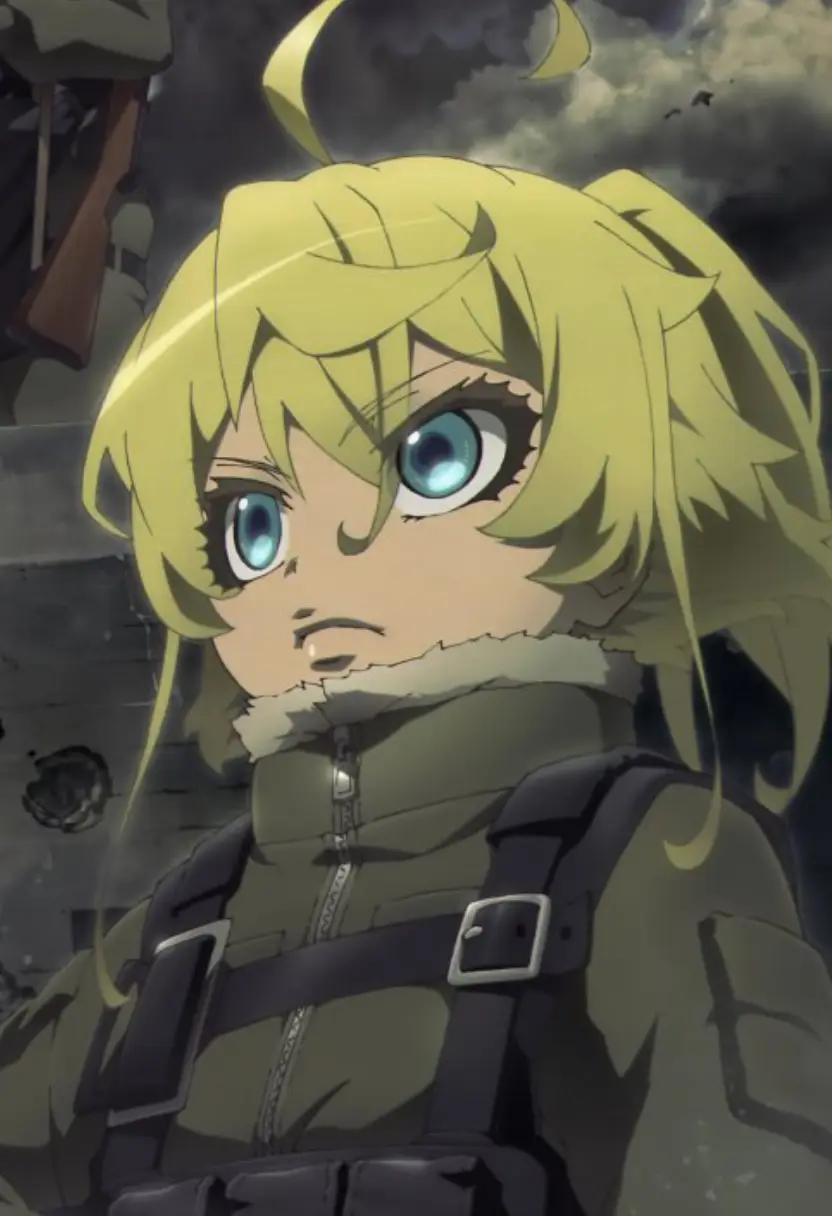
The fundamental tension in isekai power is not how much damage one can deal, but whether that power grants agency or further servitude. A YPS-6 hybrid and a YPS-3 physical combatant operate on such divergent scales that a direct power comparison is meaningless; instead, their divergence reveals the genre's split between the fantasy of transcendence and the reality of optimization. Jinwoo treats the system as a ladder, utilizing a leveling interface to systematically erase every limitation until he achieves total self-determination. His journey is a linear ascent toward an Ego score of 100, where the world eventually bends to his will. Conversely, Tanya views the system as a cage to be managed. Her meticulous adherence to military bureaucracy and utilitarian logic does not liberate her; it makes her too valuable to the state to ever be left alone. While Jinwoo’s growth leads to the solitude of a monarch, Tanya’s growth leads to the trapped prestige of a high-ranking officer. One conquers the game to stop playing; the other plays the game perfectly only to find the game owns her. This contrast highlights a core isekai duality: the difference between the protagonist who breaks the world to save themselves and the protagonist who masters the world only to become an efficient tool.
Archetype breakdowns and dispute court land in later phases.