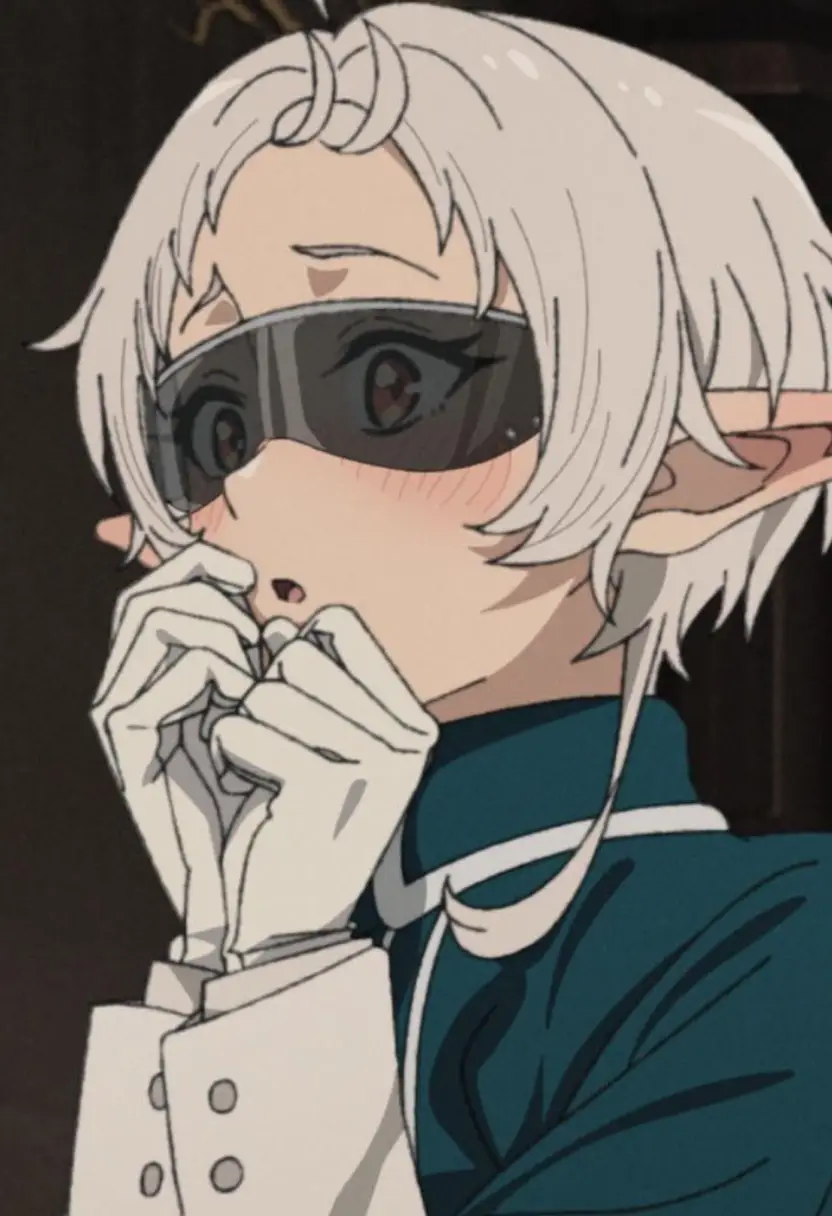

The fundamental divide between two characters sharing a YPS-3 ceiling is not what they can destroy, but why they choose to do it. One treats city-level destruction as an immutable identity, while the other treats it as a prerequisite for belonging. For Megumin, the refusal to diversify her skill set is a radical act of ego, transforming a tactical liability into a personal brand. Her power is an aesthetic choice; she accepts the immediate incapacitation of her body because the visual spectacle of Explosion validates her existence. She does not seek to optimize her role in the party but to force the party to revolve around her singular, irrational obsession. Conversely, Sylphiette views her magical aptitude as a tool for bridging the gap between herself and those she loves. Her transition into the persona of Fitts demonstrates a willingness to erase her own identity to achieve the utility required to stand beside Rudeus. While Megumin's path is one of stubborn specialization, Sylphiette's is one of disciplined assimilation. This divergence is evident in their Growth scores; Sylphiette evolves from a marginalized child into a strategic asset, whereas Megumin remains a static force of nature who merely finds a group that tolerates her eccentricity. The tragedy of the former is the effort spent trying to be enough, while the comedy of the latter is the joy found in being intentionally insufficient. Both possess the capability to threaten a city, but one uses that power to build a wall of individuality, and the other uses it to build a bridge toward domestic stability.
Archetype breakdowns and dispute court land in later phases.