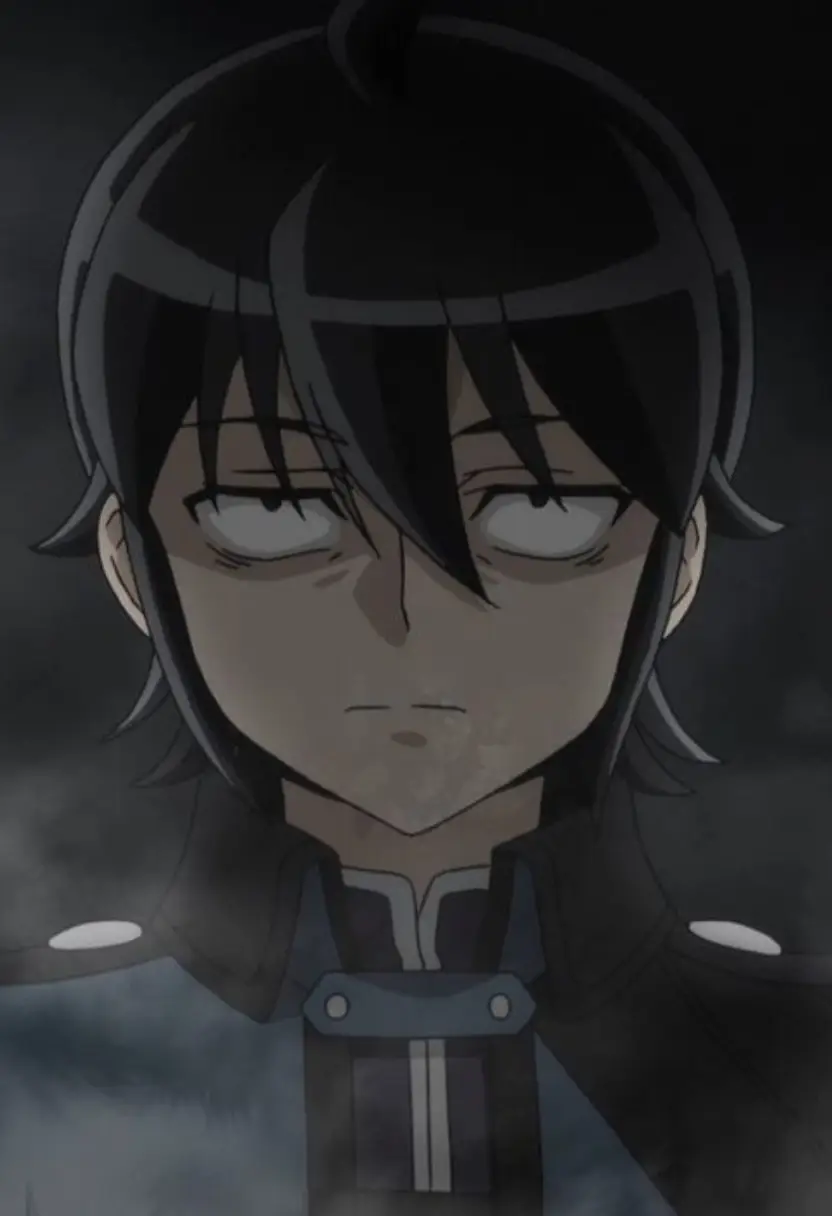

The fundamental divide between these two YPS-4 entities lies in how they weaponize stability. While both possess the capacity to dismantle national armies, one uses this ceiling to vanish from the world, while the other uses it to build a wall against it. For Azusa, power is a shield for passivity; she converts her overwhelming strength into a social gravity that pulls disparate souls into a domestic harmony. Her victory over the Blue Dragon tribe serves as a boundary marker, not for conquest, but to ensure the sanctity of her tea time. In contrast, Makoto’s strength is born from the trauma of rejection. His creation of Asora is not a retreat into peace, but a defiant act of territorial sovereignty. He does not integrate the world; he segregates himself from it, maintaining a cold, pragmatic distance from the Hyuman society that spurned him. This divergence is clearest in their DNA profiles regarding Darkness and Bonds. Azusa’s near-zero Darkness score reflects a life where power removes the need for cruelty, allowing her Bonds to reach a maximum capacity of unconditional kinship. Makoto carries a significant moral weight, utilizing a sociopathic pragmatism to protect his inner circle. He treats his sanctuary as a fortress of outcasts, whereas she treats her home as an open door. Ultimately, they represent two opposite responses to the burden of the YPS-4 tier: the desire to be forgotten versus the desire to be independent.
Archetype breakdowns and dispute court land in later phases.